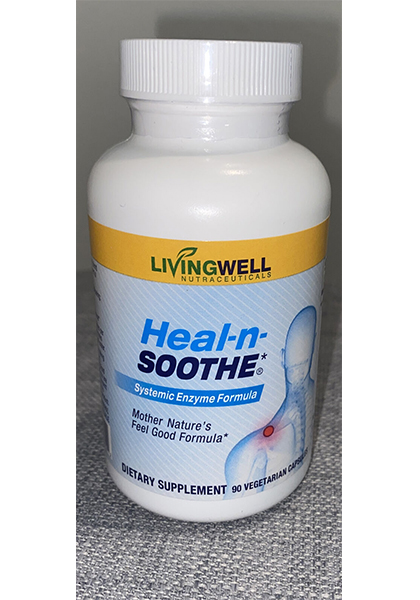
Heal-n-Soothe is a dietary supplement marketed for joint support, muscle recovery, and general inflammatory-response support. It takes a different approach from most products in the joint-supplement category: rather than being built around glucosamine, chondroitin, or MSM, it is positioned as a systemic proteolytic enzyme formula paired with several botanical ingredients traditionally associated with inflammatory response.
Each bottle contains 90 vegetarian capsules, and the brand describes a flexible dosage model ranging from one to several capsules per day depending on the user’s goals and how the body responds. The product is sold directly through the brand’s website and is also offered on a monthly “Smart Ship” subscription program at a reduced per-bottle rate.
According to the manufacturer, the capsules are positioned to support:
- Natural inflammatory-response processes across the body
- Joint and muscle comfort as part of a daily routine
- Soft tissue and muscle recovery over time
- A healthy immune response through antioxidant activity
Who Makes Heal-n-Soothe?
Heal-n-Soothe is produced and sold by The Healthy Back Institute (HBI), a U.S.-based company that also operates the website. The brand was founded by Jesse Cannone, who is referenced throughout the site’s materials as the company’s founder and public face.
The Healthy Back Institute focuses on back-pain-related content and a product line that includes supplements, topical pain products, and physical recovery tools such as inversion tables and heating pads. The brand states that Heal-n-Soothe is blended, encapsulated, and tested in the United States, with the ingredients themselves sourced globally. The product is manufactured at an FDA-inspected, cGMP-certified facility located in New Jersey.
The brand also states that Heal-n-Soothe is submitted for random third-party lab testing against USP, AOAC, FDA-BAM, and HPLC standards and lists several screens it performs, including heavy metals, multi-residue, microbe, and residual solvent testing. Compared with many direct-to-consumer supplement brands, the level of manufacturing and testing disclosure published on the product page is relatively detailed.
What’s in the Formula
Heal-n-Soothe is built around a proteolytic enzyme base paired with several botanical extracts. The brand describes the formula as one of the higher-potency proteolytic enzyme blends on the market and notes that the enzymes used are fruit- and fungal-based rather than animal-based, which the brand states allows the capsules to function without enteric coating.
The listed ingredients include:
- Proteolytic Systemic Enzymes — the central component of the formula. According to the brand, these enzymes are intended to help the body process proteins associated with injury or tissue irritation throughout the body.
- Bromelain — a proteolytic enzyme extracted from pineapple. The brand cites research on bromelain and its association with immune and tissue-recovery processes.
- Turmeric Extract — a botanical from the turmeric root related to the inflammatory response.
- Papain — a proteolytic enzyme derived from papaya.
- Boswellia Extract — a plant extract commonly used in joint and inflammatory-response formulas.
- Rutin — a flavonoid with antioxidant activity, naturally present in various plants and fruits.
- Mojave Yucca Root — included for antioxidant content and its traditional association with inflammatory response.
- Ginger Extract — a root extract historically used for its association with digestive comfort and joint response.
- Devil’s Claw — a botanical traditionally used for joint comfort and referenced for its association with COX-2 activity.
- Citrus Bioflavonoids — antioxidant compounds that the brand associates with support for connective tissue and nutrient absorption.
The capsules are vegetarian, gluten-free, and non-GMO, and the brand states the formula contains no animal-derived ingredients. Heal-n-Soothe is also labeled free of egg, milk, peanuts, tree nuts, fish, soy, wheat, and crustacean shellfish. The brand does not publish per-ingredient milligram amounts in plain text on the product page; the Supplement Facts panel is displayed as a clickable label image.
What the Brand Claims
Positioning by The Healthy Back Institute on the Heal-n-Soothe page centers on the following themes. These are statements drawn from the brand’s own marketing materials and are presented here as brand positioning rather than independently verified outcomes:
- The formula is positioned as a natural pain-defense supplement built around systemic proteolytic enzymes, intended to work across the body rather than being localized to a specific joint.
- The brand describes Heal-n-Soothe as one of the highest-potency proteolytic enzyme formulations available and states that it contains no fillers or preservatives.
- Marketing copy associates the formula with soft-tissue recovery, immune-response support, and long-term inflammatory balance rather than immediate symptomatic relief.
- The brand cites peer-reviewed ingredient-level research on the product page, including references to studies on bromelain, turmeric, papain, Boswellia, rutin, yucca, ginger, Devil’s Claw, and citrus bioflavonoids.
Independent clinical trial data on the finished Heal-n-Soothe product is not published on the page. The references are to research on individual ingredients rather than to clinical testing of the complete formulation. Standard regulatory disclaimers apply: statements have not been evaluated by the FDA, and the product is not intended to diagnose, treat, cure, or prevent any disease. Individual results may vary.
Directions for Use
The brand suggests taking Heal-n-Soothe on an empty stomach—30 minutes before meals or 60 minutes after meals—with a full 8 ounces of water, followed by another 8 ounces of water 15 minutes after each dose. The typical starting dosage is 2 capsules twice per day or 4 capsules once per day, with the brand noting that some users experiment with higher doses if they do not notice a reduction in discomfort at the starting amount. Some users take the full daily dose before bed.
The brand describes proteolytic enzyme effects as cumulative rather than immediate, meaning that consistent daily use over a period of weeks is typically required for any potential ongoing effect. Individual responses vary based on diet, age, baseline health, medication use, and lifestyle factors.
Heal-n-Soothe has an unusually detailed set of contraindications that buyers should review carefully. According to the brand’s own FAQ, the product should not be taken by:
- Individuals taking blood thinners or anticoagulants, including generic versions
- Individuals with known or suspected ulcerations or an inflamed intestinal tract
- Women who are pregnant or lactating
- Individuals currently taking antibiotics
- Individuals allergic to pineapples, papayas, or any of the listed ingredients
- Individuals under the age of 18 without parental consent and physician supervision
- Individuals with active bleeding or recent cuts, until the risk of bleeding has stopped
The brand also notes that daily NSAID users (including low-dose 81 mg aspirin) and individuals taking calcium channel blockers or antihypertensive medications should consult a physician before use, due to possible interactions with Citrus Bioflavonoids and Rutin. The brand advises stopping Heal-n-Soothe at least two weeks before any scheduled surgery.